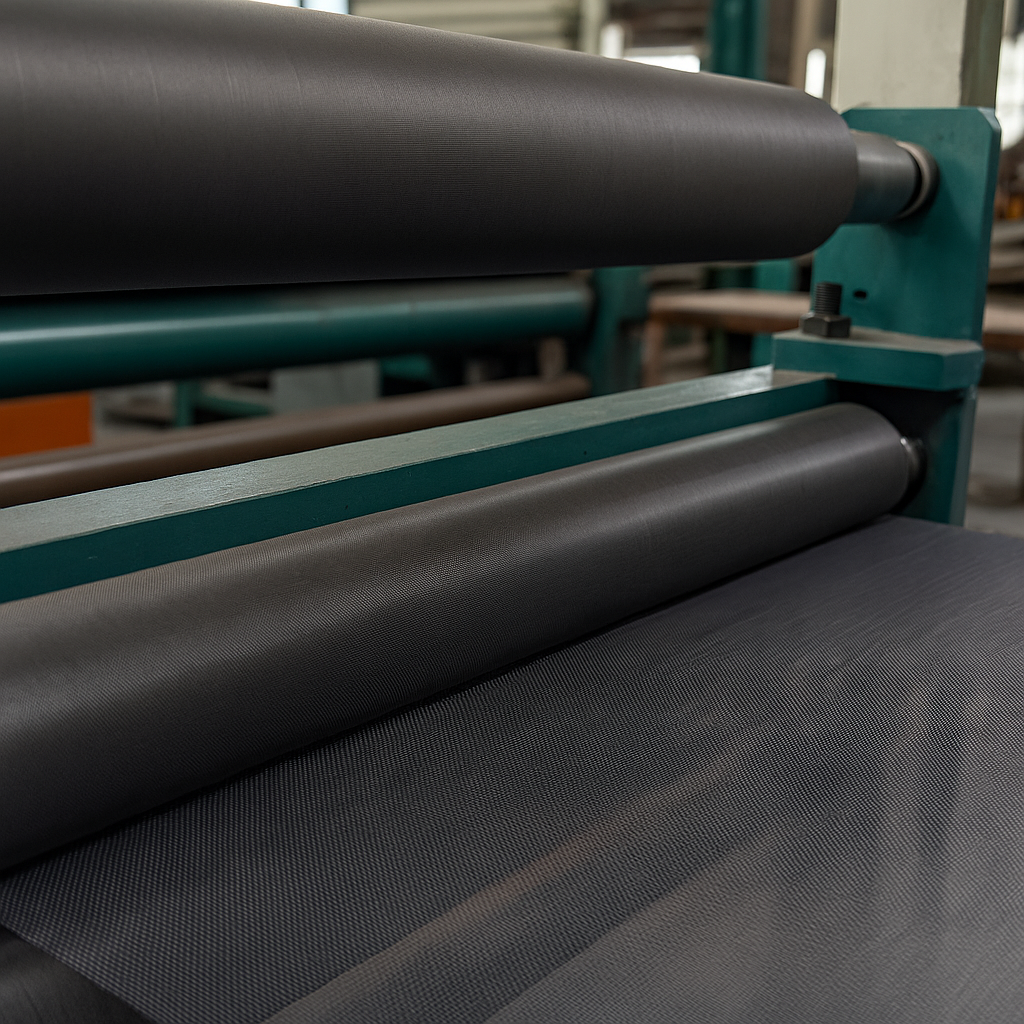
During window screen assembly and re-screening processes, fabricators frequently confront an engineering headache: "Why does the screen mesh sag or loosen in the center even though the perimeter is tightly pressed? How can the center tension line be precisely recalibrated during refabrication?" As a dedicated window screen manufacturer, Ji'an Screen Mesh delivers a technical breakdown of point-fixing versus continuous spline-groove mechanics and material thresholds.
1. Root Causes: Mechanics of Center Sagging Across Two Fixing Methods
| Fixing Method | Material Thresholds & Target Profiles | Mechanisms Inducing Center Sag | Engineering Precautions |
|---|---|---|---|
| 1. Point-Fixing System (Screws / Staples / Edge Bending) | Strictly for high-tensile metal mesh: • Standard 304 stainless steel (600–800 MPa), wire diameter ≥ 0.35 mm; • Aviation aluminum alloy (350–400 MPa), wire diameter ≥ 0.45 mm. Matched with traditional security frames. | Stainless steel tensile strength far exceeds aluminum profiles. Attempting to reverse-stretch high-tensile mesh via profile edge-bending violates mechanics, forcing profiles to bow inward ("waist-in") and causing center sagging. | Rule: Strictly avoid edge-bending on ultra-narrow frames or oversized screen doors. |
| 2. Continuous Spline Groove (Channel + Spline Gasket) | For flexible and ultra-thin meshes: • Specialty metal mesh (Clear-view, classic black stainless); • Non-metal mesh (48-mesh functional, PET, fiberglass mesh). Matched with spline-groove extrusion profiles. | Forcing the screen directly into the groove causes uncontrolled mesh displacement. Uneven dragging into the channel creates frame deflection or perimeter clamping with complete center tension loss. | Rule: Prohibit direct hammer-splining; mandate pre-positioning steps prior to spline insertion. |
2. Sourcing & Workshop Best Practice: The Mandatory Pre-Tensioning Phase
Eliminate Direct Forcible Splining: Never force the spline gasket into the groove without anchoring the mesh first.
Pre-Positioning Tools: Mandate the use of spline rollers, double-sided holding tape, or dedicated adhesives to anchor the mesh evenly across the frame before final spline locking, eliminating lateral yarn slippage.
3. Sourcing FAQ
Q: Can narrow-frame security screens be stretched tight by profile bending?
A: Absolutely not. The excessive tensile strength of stainless steel (600–800 MPa) will cause the aluminum profile to deform inward, resulting in permanent center looseness.
Q: Where to consult flat, non-sagging mesh solutions?
A: Consult Ji'an Screen Mesh for high-flatness fiberglass, PET, and stainless steel screen rolls engineered for reliable tension maintenance.